A Memory This Size
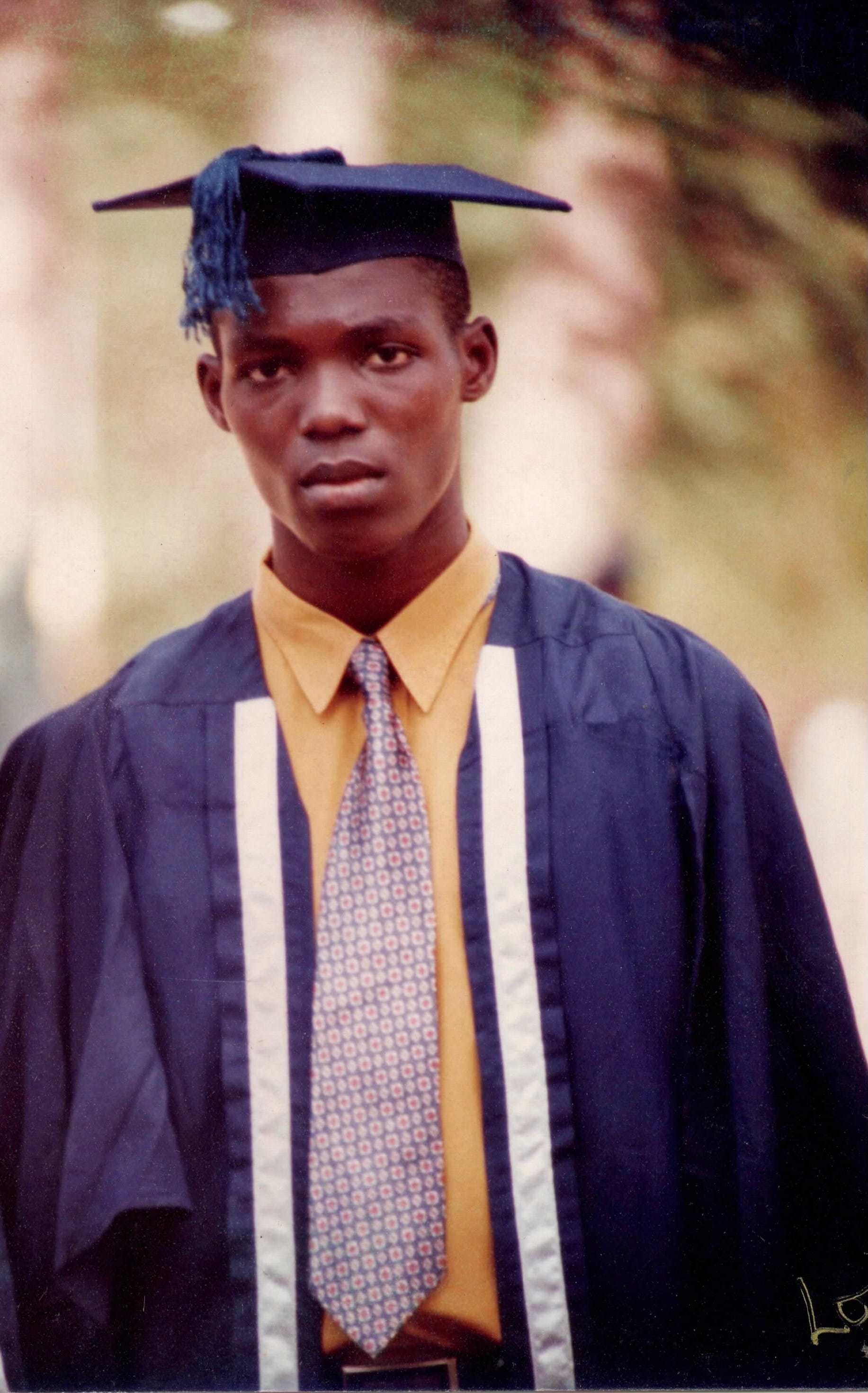
Remembering Azan John 1985-2003

Some days, when you want to forget, guilt arrives as punishment for the wanting, and everything comes back fresh.
You have just read an essay by Marion Winik in which she says she let her stillborn son, Peewee, go because she could not hold on to a sadness that size for very long. You read the line again. Then again. It makes sense. You say it to yourself: I cannot hold on to a sadness this size for very long. You try it on like a stranger’s clothes. It feels dirty.
Sometimes you catch yourself feeling entitled to a greater sadness than anyone else in your family, including your parents, and you do not entirely resist the thought. You were there when it happened. You pulled him out of the deep end of the Olympic-sized pool and laid him beside it. You put your ear to his chest. Nothing. Then your mouth to his mouth, breathing for him the way you had read that you could breathe for someone whose body had forgotten how. You pumped his chest with both hands. You rested his head against yours and stared into his half-open eyes, pressing his cold body against your warm one as you raced to the hospital, willing him to live, to breathe, to smile and say, ha! I fooled you.
You knew him better than you knew anyone else. He told you secrets he would never have taken to your parents, the kind that needed someone close enough to understand and far enough from authority not to act. He told you fears he would have been too proud to confess to his friends. He brought you troubles he could not yet name properly, because you were the older brother he believed was wiser.
You shared resentments against your parents, against the house that could not contain your mother’s emotions or your father’s grief about them. When he told you that you were a hypocrite, listening to both of them separately, validating each complaint, taking neither side and somehow taking both, you knew he was right. Neither of you could wait to leave. You shared a love for water. River or pool, it did not matter. It did not matter that both of you had been forbidden from going near any body of water.
Your family never talks about him. No one sat down and made a rule. Silence simply took the shape of authority and stayed. Mentioning his name now feels like breaking something in the room. When someone says it by mistake, everyone goes still.
It angers you, this family gift for erasing the dead. It angers you that history is being rewritten without him, without the things he said, the things he did. Some days you say his name over and over in your head, hoping it might keep him from fading.
Azan.
Azan.
Azan.
His grave is unmarked. When you go back to the burial ground, all you see are mounds of earth. You cannot tell which one holds him. It is not your tradition to mark graves, but it still hurts not to be able to tell where exactly he is.
Apart from his photo album, what you have of him is memory, and the fear of losing memory.
These days you try to age him forward into the man he would have become. You give him more flesh, a moustache, a profession. He would have qualified as an electrical/electronics engineer. If what you remember of him is true, he would have loved the work. He loved opening devices up. He loved the pleasure of understanding how something held together by taking it apart. The television was the only machine in the house he did not dismantle. Things with little parts make your head spin. You avoid screws the way flies avoid kerosene. It amazed you that he could remove what seemed like a hundred pieces from a single device and still know, without consulting anything, exactly where each one belonged.
You have always feared the failures of your own memory. In Primary Four you froze in a spelling bee, a blank white patch opening in your head where the letters should have been. In Junior Secondary you were one of the best readers of French in your class, but lost a major role in the national French drama competition because you could not remember your lines. Your teacher would not allow anyone to read from paper. What you fear with Azan is a forgetting that leaves no trace behind it.
So you memorize him against disappearance. A phrase you can still almost hear in his voice. The way he wore his clothes. His pronounced cheekbones, long limbs, flat forehead, the cone-shaped navel, the flat stomach he was trying to turn into a six-pack before he died. You keep his photographs close because they hold what memory cannot always be trusted to keep. When the sadness comes, you do not resist it. Many years later, you let the tears do what they have come to do.
***
You are both in secondary school, the same height even though you are two years and four months years older. Everyone thinks you are twins, though you can never see the resemblance. His name, Azan sounds close enough to Hassan, the Hausa name for one of twin boys, to worsen the confusion. After a while you stop correcting people. Somewhere inside the mistake, both of you like it.
You walk into the living room and find him on the landline to his friend Michael, reading your poems aloud from your little notebook. You do not like your work half as much as he does.
—I hate poetry, he says, —but I love your poems.
He refuses every other poet you recommend. Whatever you write, he reads with the seriousness of a believer. You love this faithful one-man audience, this younger brother who trusts your words more than you do.
By the time he finishes secondary school, two years after you, his body has already made certain things plain. He will be bigger than you. Taller certainly. Stronger almost everywhere. You saw it coming the last time you fought as boys. You still won, but only just, and the effort told you that childhood had closed behind you. Sometimes you think back to those fights and laugh.
He is touchy in ways that would be funny if they were not so absolute. Passing his food under sunlight, for example. In the old low-cost house, all the rooms opened into the courtyard, so to get from the kitchen to anywhere else you had to step into the open. He would shield his plate with his body.
—When sun touches oil it changes the taste. I hate the taste of sun on oil.
And somehow, even when he is not there, he knows when the sun has touched his food. He hates the smell of matches too and will not strike one unless he has no choice. When he does, he washes his hands thoroughly afterwards, as though the smell might cling to him.
One day Dad buys food items that need to be taken from the boot of his old Mercedes into the kitchen. As firstborn, you are expected to carry the heaviest thing, the fifty-kilo bag of rice. You crouch, grip one end, drag, lose your hold, nearly fall. You try again. Your father watches you struggle.
Azan leaves the yams, lifts the bag of rice in one motion and runs with it toward the kitchen, his long strong arms doing what yours cannot, dodging the dried orange tree with its dead branches and thorns before turning through the doorway. Shame arrives at once. You look away from Dad’s irritated face that is saying: You cannot lift an ordinary bag of rice. Look how easily your younger brother has done it.
Azan does not rub it in. He worships you. Hangs onto your every word. Trusts you with a faith you have not earned. It is hard to resent a sibling who believes in you more than the evidence allows.
***
You are six years older than your sister and almost ten years older than your youngest brother. Your relationship with them is not what you have with him. Some days you think they do not like you half as much as they like him. Even though he is tougher on them, they obey him without grumbling. Even though he hits your sister on occasion. You can barely get either of your other siblings to fetch you water from the kitchen without an argument. They think you enjoy asserting your authority as firstborn too much. So you find a way around the friction. You tell him what needs doing and he tells them. They listen to him. As long as the thing gets done, you tell yourself you do not mind. It is a small lie, and the house is full of them.
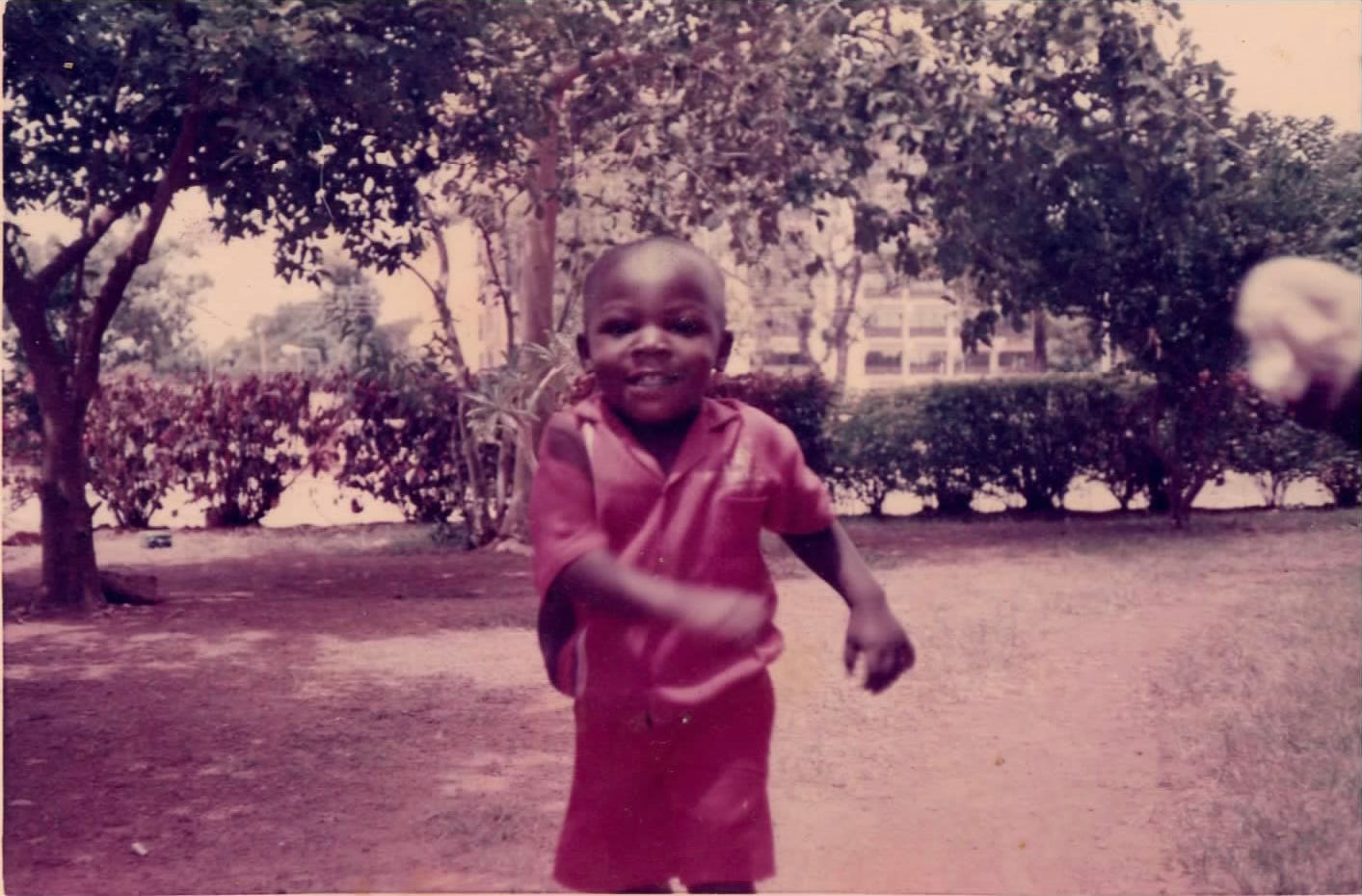
He is nine or so when he starts stealing. Money. You are not sure why. He slips into your mother’s room and helps himself from her handbag or purse. She is shaken by it. When she finds out it is him, she and Dad sit him down and talk for hours. They probe and prod and threaten and cajole. They use the Bible and worldly wisdom. He says nothing. You wonder if someone is bullying him into giving them money. That kind of thing happens at schools in your city. You are afraid he will grow into a thief. Then, after a few months, it stops the way it began: without explanation, without ceremony, without confession. He never steals again.
You accept it then the way you accept rain — something that comes and goes without owing you an explanation. It is only now, when you cannot ask, that it becomes a question.
The first time you are truly afraid for him comes only a few months after your family moves to the new house in the south of the state, the one you enter under mobile police escort because in Kaduna, where you live can decide whether you live or get slaughtered when Christians and Muslims begin killing each other. The house is not finished yet. The flush doors open and close by themselves, as though someone invisible is trying them one by one. You all joke about spirits invading the place. Your mother says there is no point running if they are really spirits.
—When they come, just dialogue with them, she says. —Ask them what they want.
Azan is running through the flat after pranking your sister, who is chasing him. You are outside in the compound, green with trees, orange, mango, lemon, pawpaw. The main entrance has a clear glass sliding door. Sometimes, especially at night when everywhere is lit, it is hard to tell if the door is open or shut.
You see him run right through it.
It feels like something tearing inside you. You run to him. He is bleeding in several places. You scan his body, his face, stomach, eyes. His arm is cut badly. He gets up, tries to walk, falls.
—I can’t see, he says. —I am dizzy.
A neighbour who is a nurse stitches him up in the little drug shop in front of her house. He does not need to be taken to hospital.
***
You are in the old house when Azan walks in with a sick-looking black mongrel with brown patches above its eyes. It might have been cute if it were not so tiny and malnourished. It is too small for a proper leash, so he tears a strip of cloth from an old wrapper, ties it around the puppy’s neck and fastens it to an iron pillar at the far left of the courtyard, between the tall guava tree and the toilet. Its bark is fierce but feeble. You are angry, but he is immovable. This is the first dog you will have. He is the only believer in it. He names it Shanny and raises it into a beautiful, wild creature that terrorises the neighbours.
After Azan is gone, Shanny becomes simply a fact of the household — fed, leashed when strangers came, neither loved nor resented, just maintained. Temperamental. Unpredictable. No one knew quite how it would react on any given day, and no one tried to know the way he had tried. It stayed that way for years, this beautiful difficult animal that only one person had ever truly believed in, until one day it went out and didn’t come back. In this neighbourhood, a dog that goes missing usually ends up on someone’s plate. You do not let yourself think about it too long.
***
The one thing guaranteed to make both of you quarrel is table tennis. A neighbour owns a table and lets people pay to play. After school you take off your uniforms, sometimes just the shirts, and head to Emmanu’s house. You always win and he always gets angry because you always taunt him after. He flings the bat. He storms home. You laugh too hard, enjoying your victory and the tantrum that follows it.
Sometimes, during the dry season, when the water is clearer and the rocks still visible beneath the surface, you sneak off to the river with boys from your neighbourhood. There are few sins in your house greater than going to the tributary of River Kaduna that flows only two streets away on Ramat Road. Your mother would have a heart attack if she knew how often you swam in that filthy, dangerous water. Once, a boy plunged headfirst onto the rocks and split his skull open. You carry Vaseline in little cellophane wraps because afterwards your faces turn whitish. There is nothing you can do about the red eyes. Your parents never catch you.
Sometimes you wish you had the kind of heart he has. You wish you had the courage to steal your father’s car. Dad is too paranoid to let his over-eighteen son drive. You wish you could refuse the way Azan sometimes refuses. You wonder what moves through him when he does it. He teases you for fearing too much and you hate how often he is right.
***
The first time you discover death, you do it alone. You are fourteen when you hear that a boy who hanged himself in a gully with mango trees is to be buried in the Christian burial ground opposite your house. It is mango season and you wonder if he saw a ripe one before he tied the rope to the branch. If he ate one first. If the sweetness stayed with him while he made the knot. Mercy, the housemaid who knows everything about everyone, narrates the details as though the suicide were her invention. The rope he used was from the bucket rope for his family’s well. He took it from the half gas-canister it was tied to.
You imagine him choosing the site, reconsidering, choosing again. You imagine him loosening the rope from the metal bowl, folding it, carrying it through the afternoon. You imagine all the other methods he may have rejected. You want to see his face. The burn marks on his neck. The closed eyes. You want answers.
You decide to attend the funeral.
There you discover your fascination with the burial ground, with hurriedly built coffins and sombre sermons straining above crying relatives. From the window of your small living room, through the metal bars, you can see the street that separates your block of low-cost flats from the Christian side of the burial ground. A burial usually begins with two or three men early in the morning, clearing the brush with cutlasses or machetes, then digging with daggers and shovels. Their faces give away nothing until tiredness arrives and their whole bodies begin to shine with sweat. Then the male relatives start to come. Folded arms. Downturned mouths. Eyes fixed somewhere beyond the place they are standing. They inspect the grave, checking whether grief has at least been measured correctly.
The women’s arrival is your signal to prepare, because after that the crowd makes it harder to see the freshly dug grave, to see the coffin and smell the fresh varnish.
Today the diggers come. Then the men. Then the women. Then the pickup truck and the cars that clog your street. You are there before the truck but after the women. It is four in the afternoon and your father is not due home for another two hours. You do not enter through the gate. You slip in through a gap in the barbed wire fence, the point closest to your house. The shrubs there are familiar to you. You were here two days ago for another burial. A child in a small coffin. Azan does not know. He is off playing somewhere with his friends.
The dead boy’s brothers are angry. They do not nod when the pastor, preaching in Hausa says, for everything under heaven there is a time. A time to be born and a time to die. They do not hum amen when he prays that God will ferry their brother straight to heaven. One of them turns suddenly and catches you staring. In his face you see the urge to drag his brother out of the coffin and slap him back into the world for dying.
You recognise the hymn from other funerals. You do not know the words because although you also identify as Christian, Jehovah’s Witnesses have their own language, their own songs, their own way of worship. Singing the songs of other churches is considered participating in worship of false gods.
Tears do not come to you until the pastor asks the family, beginning with the parents, to pour sand on the coffin. The mother bends for a handful of damp red laterite. Two thickset women hold her by the arms as she moves toward the grave, sobbing. The moment they release her, she screams and tries to jump in after the coffin. They catch her before she can slide all the way down the heap of earth. The sound that leaves her body does something to yours.
Your nose begins to tremble and hurt. You know if the first tear falls, the rest will rush after it. Holding back the first one becomes the whole battle.
You push through the crowd, run along the bushy path, kick through broad leaves of the bright green shrubs, run past the car that brought the coffin and cross the road in front of your house. You go in and lock yourself in the bathroom. You still have a few minutes until your father returns. He is predictable, your father. You feel your chest swelling, about to explode.
You wonder what it feels like to die. What eternal non-existence feels like. You close your eyes and try to conjure eternity. Your mind travels through dark tunnels of space and time until you start to get dizzy and scared and open your eyes. You wonder what it means when they say God has no beginning and no end. Again, you try to imagine having no beginning and it gives you the same dizzy feeling.
Why do we have to die?
You think of your father’s lessons about Jehovah and His right to rule, about Adam and Eve, about the fruit that cost all of you perfect life. You know the answers he would give. None of them work in your chest. You cry for a suicidal stranger and for the thing you will one day share with him.
You hear Azan’s voice outside, then your father’s. You strip quickly, turn on the shower and hope the water is running.
***
Your fascination with death and burial grounds dies when Azan dies.
***
You are back home because university lecturers across the country are on strike. You were unable to get into university for two years, so now you and Azan are nearing the end of first year—you in Zaria, he at Abubakar Tafawa Balewa University, Bauchi. It is the first time you have been away from each other this long. He has grown leaner, taller. His eyes sit deeper in his face. He is still a boy, but a boy already trying on the rough edges of manhood. More temperamental. Wilder. More alive to noise. You, meanwhile, have turned inward. You have had your first sexual experience and are carrying guilt like a millstone around your neck. He has found new friends. You want quiet. He wants Eminem at full volume. He is out more often. Once you try to go out with him and his friends but you find you have nothing in common.
The house has thin walls and you can hear everything he does in his room next-door. You tell him to turn the music down. He turns it down, then up again. You tell him again. He turns it up louder. What begins as irritation becomes a quarrel, and for the first time he says it.
—I will kill you.
You look at him and do not recognize the eyes making the threat. Fear rises in you and, because you do not know what else to do with it, you take it to your father. The mention of angry rap music is enough. Your father sides with you instantly. You and Azan stop speaking.
The silence lasts a month. He acts tough, but you can see the boy inside him. One day you realize he wants to go out and has no money. You split your cash in two and walk into his room. You ask if he wants some. He looks away and says nothing. You leave the money on the table and go. Later, when he has dressed and is heading out, you look in and see the money is gone. You smile.
That night the two of you talk again. He tells you that for the first time you let him down.
—There is nobody I look up to like you, he says, —but you just disappointed me.
The sentence lands harder than the threat did. You apologize. And this opens the door. He tells you he is having trouble at university. He was bullied to join a gang but does not want to be a part of it. He is afraid that if he goes back and maintains his stance, someone might kill him. You hear, all at once, the fear underneath the aggression, the loud music, the fighting, the temper. You feel ashamed that you mistook the noise for arrogance when it was alarm. You tell him you will sort something out. You will go back with him yourself if you have to. There is a friend you have in Zaria, someone notorious for having been a violent member of a similar gang, but who left and became Jehovah’s Witness like his mother and siblings. This friend had told you a lot about the violence, the maimings, and even that he had been in prison for murder until someone found the person he was supposed to have murdered still alive in another town. This friend could help.
A few days later, some of the boys in your Jehovah’s Witness congregation are planning to swim at the largest public pool in Kaduna. You are already tired of them, tired of the chatter, so you plan your own outing on April 1st, two days before theirs. You tell yourself the point is to talk to Azan properly, ask him the details of his situation on campus. To help him think. To keep him near you.
There is a girl he likes and he asks whether she can come along. You say yes. On the way, you stop at her house to pick her up. At the pool she decides not to swim, so you stay near the shallow edge with her, talking. Azan wants water. Wants motion. Wants to jump in and out of the deep end.
When you turn around, he is already next to the diving board with boys you do not know.
—Come and dive, he shouts.
You refuse.
—You fear too much, he says, laughing, and dives again.
For a while you do not look his way. The girl is beside you. The afternoon is thinning. Then you realize you have not heard his voice in too long.
You turn.
You cannot see him.
You ask the few persons still there. All the boys you saw with him are no longer there. No one has seen him. You put on your clothes and leave the pool area, thinking perhaps he has gone out to buy something. It is getting cooler. You are tired of swimming. Seconds pass and begin to harden into something else. You go back. Your heart has already started running ahead of you. Then it occurs to you that he may be in the water.
You take off your clothes and dive into the deep end.
Underwater, you try to keep your eyes open but the chlorine stings your eyes. You come up. Dive again. Your lungs begin to burn. Come up. Dive again. On the third descent, around where the pool is ten feet deep, your hand touches something that should not be this still.
With the lifeguard’s help, you pull him out and lay him beside the pool.
His body shows no obvious injury. His head is not swollen. Neither is his stomach. You hold him. Put your ear to his chest. Nothing. Mouth-to-mouth. Press his chest with both hands. Beg God for one breath.
Just one. Please. Just one.
The people around you begin to thin. Then disappear. By the time panic has become action, there is almost no one left, not even the life guard.
At the entrance of the pool stands a boy of about sixteen or seventeen with car keys in his hand. You go to him and beg him to take you to the hospital. He says no at first, terror plain on his face. You beg again, tears in your eyes, and at last he agrees.
The car is too small for the length of your brother’s body. He has already begun to stiffen. You lay him with his head in your lap and his legs stretched all the way toward the back glass. He looks asleep, at peace. You keep saying please do not die. You keep saying, please Jehovah, do not let him die.
At the teaching hospital there are no stretchers. No nurses rushing out. No urgency. The doctors are on strike. Finally one appears, barely lifting his eyes from his phone.
—Drop him there, he says, pointing to a concrete slab.
He walks over slowly. Before he gets there, you bend over Azan’s body again and put your ear to his chest. You feel something pulsing and for one wild second hope rises. When the doctor finally reaches him, he pulls the stethoscope from around his neck and places it on his chest, then on his neck.
—He is dead, he says.
Only then do you realize the pulsing was your own heart, beating through your body into his.
Your father comes running into the ward. You are shocked by how quickly news has reached him. He passes you without looking and goes straight to the room where they have taken Azan. When he comes back out, his body is trembling. His face is wet, sweat or tears, you cannot tell which. He stands over you. You are on the concrete floor with your back against the wall, too stunned to cry.
—You are happy now, abi? You are happy? You have gone and killed yourselves. When we say don’t do this you think we don’t know what we are saying. Look at it now. Look at it now!
His voice seems to be speaking over your head to some other person, some other son. The world has become too strange to enter fully. The dream is too long. Too solid.
A few hours later you are home, clutching Azan’s clothes. Your head feels swollen with pressure. You sit by the borehole hand pump still holding his things: a brown beach shirt, brown chinos, grey shoes caught somewhere between sneakers and formal shoes. You cannot take them back inside.
Throughout that evening and for days after, people in an out out of the house and there is hardly any space to breathe. Everyone who comes, especially the elders from your congregation, want to pray. You are tired of prayers. You want to block out the world with your earpiece, listen to sad songs as loudly as you can, and cry. Your youngest brother, only eleven, is the only one who is not crying.
—It’s okay, he says, hugging your mother and sister. You envy his composure, or whatever it is.
Days bleed into nights. People come and go. Your mother shrieks until people hold her to stop her from tearing at her hair. You do not sleep. You do not understand how the world can continue making ordinary sounds around a house that has just been broken open.
The burial is quick, four days after he dies. Your parents attend only the funeral service. At the Kingdom Hall, where his body lies in a coffin, people line up to see him one last time. When your turn comes, you reach in and touch his face. Kiss his body. Smile without meaning to.
Your parents and siblings do not follow the body to the grave. Someone has advised that your mother is too distraught to go. There are relatives, friends, Jehovah’s Witnesses from congregations across the city. You are the only immediate family member who watches red earth hit the coffin. You stay until it is fully covered.
Later you will think that this, too, is one of the things you carry alone: the sound of soil landing on wood, the certainty of where the body ended, the fact that for everyone else the burial stopped earlier, at prayer, at hymn, at casket. You are the one who followed him all the way into the ground.
After the burial, you think obsessively about the last time you saw him alive. You keep returning to the stretch of time between his dive and your turning back toward the deep end, trying to catch there on something you had missed. There was no autopsy. You do not know whether he broke his neck diving, whether something happened in the water, whether one of the boys around him saw something, did something, walked away carrying a knowledge you will never have. You read his diary over and over. You think of the things he had begun to tell you, the danger at university, the details he never got to finish before you pulled his cold body from the pool. Nothing explains anything.
You begin speaking to a cousin who lives in the south of the country, the only daughter of your father’s first cousin. She is the only person you can talk to because she is both family and stranger. You have met her only once, when both of you were children. She contacts you after hearing of Azan’s death and from then on you start walking to a payphone ten minutes away from your house and calling her until the card runs out of units. Once a day sometimes. Sometimes twice. You do not know exactly what you are carrying to her except that she can hold it without behaving as though she knows what to do with it. Your father hates these long absences from the house, but says nothing. You see it in his eyes when you return.
A few months later the university strike is called off and you go back to being a law student at Ahmadu Bello University. Azan remains in Kaduna, under earth. The world does not end. That surprises you more than anything. It continues with its rude efficiency. People forget. You do not.
Your chest still hurts from crying. You move through lectures and corridors and questions. What if you had not suggested the pool? What if you had stayed in the deep end with him? What if you had gone to the Gamji Gate park instead? Anger sits with you like a friend. You are angry at the pool. At yourself. At God, though you have been taught that anger at God is a failure of understanding. You know the theology. Death is not the end. There will be a resurrection to paradise on earth for the righteous. You have been given every answer and none of them work in your chest. Worse, Jehovah’s standards are not yours, and yours are not His. You do not know if your brother will make it into the paradise you have been taught to desire. Was he meek enough to inherit the earth? Will you be righteous enough to live forever in it and see him?
***
When you come home on breaks from university, you irritate your father constantly. You are unhelpful and short-tempered. You come home late. You do not talk. Your siblings complain about your aggression. Your participation in religious activities turns thin and dutiful. When your father asks you to pray after the daily Bible text, you mumble words they can barely hear and end quickly. You have nothing real to say to Jehovah.
One day your father breaks.
—When your brother was alive, we didn’t feel the pain of your bad behavior so much. He was a cushion…
The words hit your body with the same force you felt the evening Azan died. He has found the wound and pressed. It feels, for a second, as though your father is accusing you of surviving badly, of taking up too much grief, of injuring the family further by not knowing how to fold your mourning into a more acceptable shape.
You walk out and sit by the borehole hand pump, the same place you sat with Azan’s clothes because you could not carry them back into the house. You are not wearing a shirt. The metal and air are cold on your skin. You do not know how long you stay there. Twenty minutes. Two hours.
You want to go back inside and say: When my brother was alive, I didn’t feel the pain of your constant fighting with Mum so much. He was a cushion. You never say it. You just sit there shivering, the sentence turning in your throat until it becomes tears instead.
***
On the seventh anniversary of Azan’s death, you post a tribute on Facebook. Albert, who barely knows you, comments that you should let go of the memories already and move on. You do not reply. What you want to write is: Albert, fuck you.
***
You finish university. Go to law school. Move to Abuja. Except for the year you return home after a horse accident in Abuja, Kaduna becomes a place you mostly avoid. You have stopped going to the Kingdom Hall. Stopped praying. Stopped calling yourself one of Jehovah’s Witnesses. Your father sends a text saying how disappointed he is that you have abandoned the faith. At once, everything long buried rises: the bitter words, the daily altercations, the second death that all of you have collaborated in through silence.
You send several angry messages in reply, saying everything you have wanted to say for years. About family. About God. About religion, especially religion. About the numbness that has followed you all this time. About being tired of pretending that faith still lives where it no longer does. Your father tries to call. You do not pick up. He writes back that he knows—or at least imagined—that all those years of anger must have been traumatising.
Instead of relief, his concession feels like something slowing the bleeding, reducing it to a steadier drip. Not healing the wound. Not ending the pain.
When you are tempted to let go, you ask not whether you want to but whether you can afford to. You do not know how to remember Azan without sadness entering the room after him. Every April 1st you write him a long letter to mark the day you pulled his lifeless eighteen-year-old body from the deep end of a pool. You tell him what is going on in your life. You tell him who is making you smile. Which relatives are married now, or dead, or being complete assholes. You laugh while writing sometimes. You cry too.
You used to tell yourself that one day you would write a clever story about him, something nice and witty, something about intensity and brevity and how a life lived so fully was perhaps always going to be short. Crap like that. You have since killed the thought.
Instead you do the simpler thing. Every year you write to him. Every year you keep the appointment. Every year you hold on because memory is all you have.
You hold on because you cannot afford to let a memory this size disappear.